Shopping for a home where you can saddle up at sunrise and hit the trail by noon? In Sonora and greater Tuolumne County, the right property can make daily horse care simple while the wrong one adds risk and cost. You want confidence that the land, facilities, and utilities truly fit your horses and your routine. This guide shows you how to spot horse‑friendly features fast, what to verify with the county, and how to assess barns, fencing, water, and wildfire readiness. Let’s dive in.
Zoning and permits in Tuolumne County
Before you fall in love with a barn or a pasture view, confirm that horses and the structures you see are actually allowed. Tuolumne County’s zoning rules live in Title 17, which defines what uses are permitted by right and which need review. You can scan the county’s current zoning reference in the Tuolumne County Title 17 zoning document.
Private vs. commercial stables in plain English:
- A private stable serves you, your household, and invited guests. It does not take boarders for pay or run lessons as a business.
- A commercial or public stable includes boarding for pay, lessons, or rental horses. This often triggers additional review or a conditional use process.
If your goal includes any paid boarding or instruction, contact county planning first. Even if a barn exists, the use still needs to match the zoning.
Quick zoning and permit check
- Ask your agent for the parcel number and current zoning class. If the listing is unclear, call the Tuolumne County Community Development/Planning office to confirm allowed uses.
- Verify building permits for barns, run‑in sheds, and loafing shelters. Ask for permit numbers and final inspection dates. Unpermitted buildings can mean extra costs later.
- If you plan a commercial-scale operation, review potential conditional use requirements in Title 17, then speak with county planning.
Pasture and forage: how much land you need
A common starting point is about 1 to 2 acres of well‑managed pasture per adult riding horse, with the exact number depending on rainfall, soils, irrigation, and supplemental hay. Extension sources use this as a planning baseline, not a hard rule. For general guidance, see extension resources like Rutgers Cooperative Extension’s Ask the Expert.
What to look for on site:
- Usable acres vs. total acres. Flat, fenced ground grows forage. Steep or brushy slopes count far less.
- Signs of pasture management. Cross‑fencing, multiple paddocks for rotation, and a dry “sacrifice” area protect grass during wet or dormant periods.
- Drainage. Watch for muddy congregation spots and braided wet areas. Poor drainage can be costly to fix.
- Shade and shelter spread. Trees or constructed shade should be available across turnout, not only near the house.
For local questions on forage species, drought tradeoffs, or wildfire-related land care, reach out to UC Cooperative Extension Central Sierra.
Barns, stalls, and hay safety
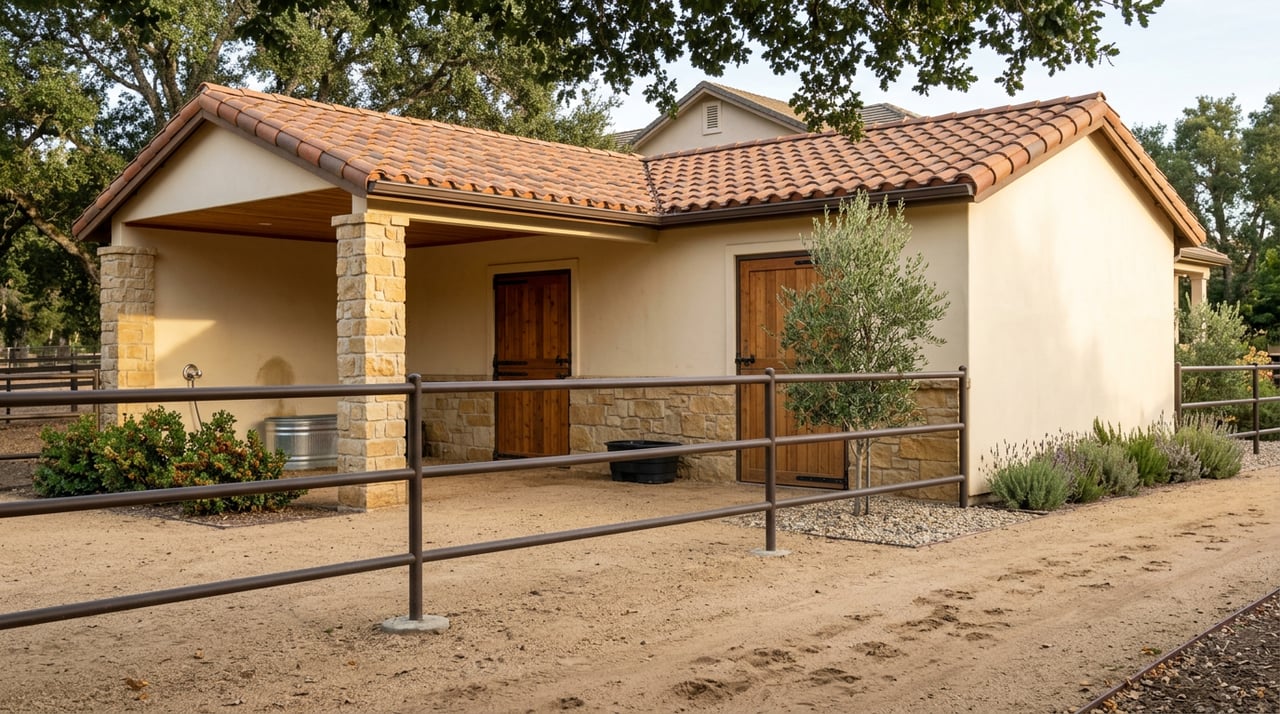
Stall dimensions offer a quick window into horse comfort. A conventional minimum for an average riding horse is about 12 by 12 feet, with larger animals and foaling stalls needing more room. You can see typical reference standards in municipal and animal-welfare guidance like the Board of Health regulations example. Always verify actual sizes with the seller or plans.
What to scan inside the barn:
- Ventilation and light. Ridge vents, cupolas, or cross-breeze windows reduce ammonia buildup and help respiratory health.
- Floors and footing. Compacted, well-drained stall bases with mats are common. Standing water or spongy, muddy floors are a red flag.
- Tack and feed storage. Dry, secure, and separate from hay is best.
- Wash area. Look for proper plumbing and an approved drain setup, especially where properties are on septic.
Hay storage and fire risk are critical. Storing hay in or very close to the barn can raise risk if hay was baled damp. Separate, ventilated hay storage and temperature checks on freshly baled hay are strongly recommended. Learn prevention basics from resources like Equus Magazine’s barn fire safety guide. Ask the seller how hay is stored, whether bale temperatures were monitored after baling, and if the barn’s electrical system has been inspected.
Fencing and paddock layout
Safe fencing saves vet bills and time. Use this quick on‑site checklist:
- No barbed wire where horses live or travel.
- Visible top rail or tape, rails about 3 to 4 feet high for typical stock. Go higher for known jumpers.
- Solid posts and tight lines. No big sags, gaps, or broken rails.
- Trailer-friendly gates. Wide gates and a good turnaround area make hauling simple and safer.
- Cross‑fencing. At least one sacrifice paddock and a way to rotate grazing.
Fence material tradeoffs:
- Wood rail is classic and visible, but needs regular upkeep.
- Pipe or steel rail is durable and visible, often higher cost to install.
- High‑tensile wire is affordable but needs a visible top rail or tape for safety.
- Vinyl rail is low maintenance, with higher materials cost.
Focus your decision on visibility, condition, and maintenance.
Water, wells, and power
Horses need reliable water access in every turnout area. Note where hydrants and spigots sit, and how you will fill troughs when rotating paddocks.
If the property uses a well, ask for recent well yield results in gallons per minute. Confirm whether the pump can serve the house, barn, and irrigation at the same time, and whether there is stored water for outages. For electrical, look for protected conduit, proper circuits, and no improvised extension cords near bedding or hay.
A professional well test is a smart step before finalizing any rural purchase.
Wildfire and defensible space in Sonora
Tuolumne County sits in the Sierra foothills, so wildfire planning matters. California Public Resources Code section 4291 requires defensible space around structures in state responsibility areas. The general concept is up to 100 feet of clearance, with more intense fuel reduction close to buildings. You can read the statute language at PRC 4291.
During showings, look for brush and ladder fuels near barns and the house, and ask about recent defensible space inspections. Combine this with hay and electrical safety steps to reduce overall fire risk.
Manure management basics
A clean, contained manure system protects your well and local waterways and keeps daily chores efficient. Look for a defined compost or stack area set back from wells and creeks. Confirm that runoff is contained, with no flow toward a road ditch or stream. If you plan to scale up operations, consult county agriculture or the regional water quality board for setback and nutrient guidelines.
Riding access near Sonora
Public land access is a major plus for Sonora-area horse owners. The Stanislaus National Forest offers popular horse-camping and trailheads, including the Kennedy Meadows and Pinecrest areas. Review the Forest’s recreation page to plan day rides and camping at the Stanislaus National Forest rec area. When touring a property, note the drive time to the nearest trailer-friendly trailhead and whether your rig can comfortably turn around on-site.
Your 10-minute walkthrough checklist
Use this list during showings. If an item is unclear, flag it for follow‑up.
Land and legal
- Confirm parcel zoning and whether horse use is allowed. Check Title 17 zoning guidance.
- Ask for barn and shed permits with final inspections.
- Note any easements or rights-of-way that affect turnout or trailer access.
Pasture and fencing
- Estimate usable, flat, fenced acres. Separate steep or brushy ground from grazeable acres.
- Verify cross‑fencing for rotation and at least one sacrifice paddock.
- Check visibility and safety of fence lines. Avoid barbed wire in horse areas.
Shelter and barn
- Measure or confirm stall sizes near 12 by 12 feet for average horses and check run‑in shed depth and drainage.
- Ask about hay storage location and any bale temperature checks after baling. Review basic fire precautions.
- Inspect wiring quality and lighting. Look for conduit and no exposed cords.
Water and utilities
- Count hydrants and spigots in each paddock.
- For wells, request recent yield and water quality tests.
Site safety and wildfire
- Assess defensible space near barns and the home. Review PRC 4291 requirements at the state code site.
Operations
- Locate the manure area and check for runoff control.
- Note distance to feed stores and large-animal vet response coverage.
Who to call during due diligence
- County Planning and Building to confirm zoning, allowed uses, and permit history. Start with Title 17 for definitions, then speak with staff.
- A licensed barn contractor or structural engineer to evaluate the barn frame, roof, and footings.
- An equine veterinarian for barn biosecurity, wash area drainage, and hay/feed storage safety.
- A well contractor or hydrologist for well yield and static water level testing.
- Local fire officials or CAL FIRE for defensible space guidance and barn fire prevention. Review PRC 4291.
- UC Cooperative Extension Central Sierra for local pasture planning and forage recommendations.
Local resources for equestrian life
- Feed and hay: Check current stock and delivery at local suppliers like Bolton Feed in Sonora. You can find a listing entry for Bolton here: Bolton Feed directory page. Confirm inventory and hours before you visit.
- Veterinary: Large-animal and mobile vets serve Sonora, Jamestown, and nearby communities. Start with a neutral directory like Jamestown veterinary clinics listings and confirm emergency coverage.
- Education and land stewardship: UC Cooperative Extension Central Sierra offers workshops on pasture, grazing, and wildfire planning.
Ready to tour Sonora horse properties with a clear plan? With zoning and permits verified, pasture and fencing evaluated, barns and hay storage checked, water and power confirmed, and a wildfire strategy in mind, you can shop with confidence. If you want a local, acreage-savvy partner to help you assess each listing and coordinate the right experts, reach out to Lisa Vandermeer for a friendly, no-pressure consultation.
FAQs
What zoning allows horses in Tuolumne County?
- Check your parcel’s zoning in the county’s reference and definitions in Title 17, then confirm with county planning whether private stables are allowed by right and if any commercial plans require a conditional use.
How many acres per horse should I plan for in Sonora?
- A practical starting point is about 1 to 2 acres of well‑managed pasture per adult horse, adjusted for local forage, irrigation, and supplemental hay, as reflected in extension guidance like Rutgers’ resources.
What stall size should I look for when touring barns?
- For average riding horses, stalls around 12 by 12 feet are a common reference point, with larger sizes for big horses or foaling; see example standards in this Board of Health document and confirm actual sizes with the seller.
How do I evaluate a property’s well for horse use?
- Ask for a recent well yield test in gallons per minute, confirm the pump serves house, barn, and irrigation together if needed, and look for backup storage for outages or drought.
What are California’s defensible space rules for barns and homes?
- California PRC section 4291 outlines defensible space requirements, generally up to 100 feet with more intense clearing near structures; review the statute at PRC 4291 and verify your parcel’s specific zone and local ordinances.