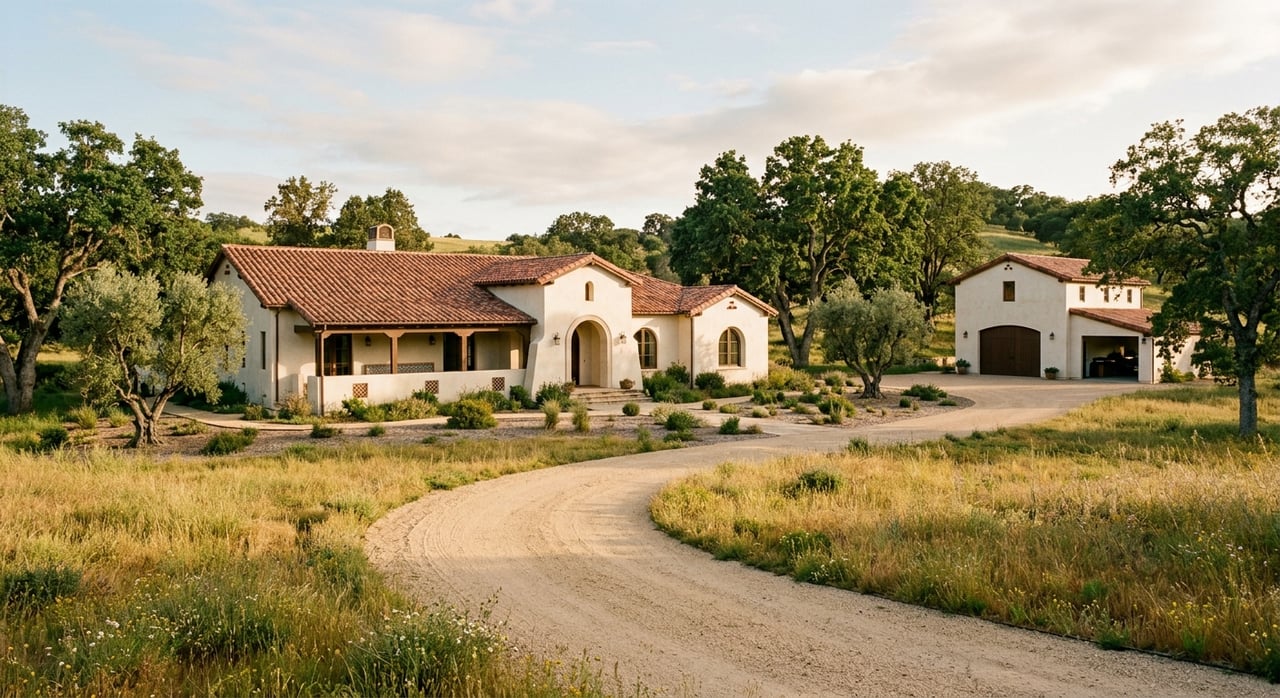
If you are dreaming about a little more space, a few outbuildings, or room for a country setup near Escalon, a small acreage property can feel like the perfect fit. But buying a ranchette is different from buying a typical in-town home, and the details matter more than many buyers expect. This guide will help you understand what to look for around Escalon, what questions to ask early, and how to avoid surprises before you buy. Let’s dive in.
What counts as a ranchette near Escalon?
Around Escalon, “ranchette” is more of a local real estate term than a strict legal category. In unincorporated San Joaquin County, the closest official fit is often Rural Residential, or R/R, which is intended for large-lot rural homesites generally in the 1 to 5 acre range.
County zoning definitions also list R-R with a minimum parcel size of 1 acre. Inside Escalon city limits, Estate Residential, or R-E, has a 25,000-square-foot minimum lot area and is designed as a more rural residential transition between denser neighborhoods and agricultural areas. That means a property can feel “country” in different ways depending on whether it is in the city or in the county.
For most buyers, the practical takeaway is simple: small acreage around Escalon often starts around 1 acre, but legal use depends on the exact zoning and location. The same size parcel may have different rules if it sits inside city limits versus outside them in the county.
Why location matters on acreage
With a ranchette, the address tells only part of the story. You also need to know whether the parcel falls under the City of Escalon or unincorporated San Joaquin County, because that affects utilities, permits, development standards, and day-to-day use.
Within Escalon city limits, residents are required to sign up for city water, sewer, garbage, and green-waste service. Outside the city, rural parcels may rely on private systems such as a well and onsite wastewater treatment, which changes both your maintenance responsibilities and your due diligence.
This is one of the biggest differences between in-town and country properties. On acreage, you are not just buying the house. You are buying the land, the systems, the access, and the permit history that come with it.
Zoning should be your first checkpoint
Before you get attached to a property, confirm the zoning and general plan designation. This step matters because zoning helps determine what the parcel is intended for and what uses may be allowed.
In San Joaquin County, zoning ranges from R-R at 1 acre to larger-lot designations such as AL, AG, and AU. Some of those districts are tied more closely to agricultural use and larger minimum parcel sizes. If you are looking at a property for personal rural living rather than commercial farming, that distinction is important.
You should also ask whether the parcel is in a Williamson Act agricultural preserve or subject to other agricultural-use restrictions. County materials state that agricultural preserves must be at least 100 contiguous acres and located in AL, AG, or AU zoning, but it is still smart to verify the exact status of any parcel you are considering.
Wells, septic, and utility planning
Utilities are one of the biggest due diligence items for small acreage. If the property is outside city limits, you should confirm whether it has a private well, an onsite wastewater treatment system, or access to public services.
San Joaquin County Environmental Health regulates water-supply wells and onsite wastewater treatment systems countywide. The well program covers location, construction, repair, and destruction of wells, while the septic program oversees design, construction, and installation of onsite systems and holding tanks.
County standards also provide a useful planning benchmark. Parcels using an onsite wastewater system and a domestic well can average 2 acres per single-family dwelling, while parcels using an onsite wastewater system with public water can average 1 acre per dwelling, subject to soil and nitrate-loading studies.
That does not mean every 1 acre or 2 acre parcel will automatically qualify for the use you want. It does mean that soil conditions, system design, and permitting can directly affect what is feasible on the property.
Outbuildings are a major value factor
One reason buyers love ranchettes is the extra utility. A detached garage, shop, barn, tack room, or storage building can make a property much more functional, but you want to confirm what is actually permitted.
In unincorporated San Joaquin County, a one-story detached tool or storage shed, playhouse, or similar accessory structure at 120 square feet or less and 15 feet or less in height does not require a building permit. If there is electrical or plumbing work, permits are still required.
Inside the City of Escalon, accessory buildings are allowed only within tighter standards. The city limits accessory structures to one story and 15 feet in height, requires setbacks from structures and property lines, and requires Planning Commission approval for accessory structures over 450 square feet.
If a property includes multiple detached structures, ask for the permit history early. This can save you from finding out later that a useful feature was added without the proper approvals.
Fencing rules are not one-size-fits-all
Fencing is often part of the appeal when you want privacy, pets, or a more defined rural setup. Still, fence rules can vary based on parcel type, yard location, and height.
In San Joaquin County, fences over 7 feet tall require a permit, while fences 7 feet or less are exempt from that permit process. County zoning also allows open fences up to 7 feet in R-R and R-VL yards, and up to 8 feet in side or rear yards on agricultural parcels 20 acres or larger, with barbed wire limited to 2 feet on top of permitted fencing.
That makes fence due diligence especially important if the parcel already has corrals, cross-fencing, or perimeter fencing. You want to know what is existing, what is permitted, and what changes may require additional approval.
Animals require more than a big yard
A lot of buyers assume that if a property has enough land, animals are automatically allowed. Around Escalon, that is not a safe assumption.
County materials distinguish household pets from livestock farming, and city code definitions of livestock farming include horses, goats, sheep, laying hens, turkeys, rabbits, and similar farm animals. In other words, the kind of animals you want matters, and how the use is classified matters too.
If animals are part of your plan, ask specific questions before you write an offer. Do not stop at “Are animals allowed?” Ask which species are permitted, whether the use is considered household pets or livestock farming, and whether any existing setup is already recognized for that use.
Fire-water and access deserve close attention
Country properties often come with safety and access issues that do not come up as often in town. Two of the biggest are fire-water capacity and legal, practical road access.
San Joaquin County Fire Chiefs’ Association guidance for above-ground static water supply systems says plans must be approved before installation. It also states that the owner or occupant is responsible for maintenance and that access to the tank and draft connections must remain unobstructed.
Access is just as important. County Public Works states that a driveway access permit may need to be filed separately, and encroachment permits are required for work that impacts the county right-of-way, including utility installation and roadside ditch changes.
County rules also note that in agricultural areas, a private right-of-way longer than one-half mile or serving more than 16 lots needs secondary access unless waived. If a property sits down a long private lane or easement, this is worth checking early.
Questions to ask before making an offer
When you buy a ranchette, smart questions can protect your budget and your long-term plans. Here are some of the most important ones to ask before you move forward.
- Is the parcel inside Escalon city limits or in unincorporated San Joaquin County?
- What is the exact zoning and general plan designation?
- Is the parcel in a Williamson Act agricultural preserve or subject to agricultural-use restrictions?
- Does the property have city utilities, a private well, an onsite wastewater system, or a mix of services?
- Are permits available for the well, septic, driveway, fences, sheds, and other outbuildings?
- Is the road public, private, or a private right-of-way, and who maintains it?
- If animals are part of your plan, which species are intended and how is that use classified?
- Does the property require or already include static fire-water infrastructure?
These questions may sound technical, but they can make the difference between a property that fits your goals and one that creates expensive surprises.
What buying small acreage really comes down to
The biggest mistake buyers make is focusing only on the house and ignoring the land details. Around Escalon, small acreage decisions are often driven less by finishes and floor plans and more by zoning, access, water, septic, fire safety, and permit history.
That is why ranchette buying works best with a practical, step-by-step approach. When you understand the parcel first, you can make a much more confident decision about whether the home and property truly fit the way you want to live.
If you are considering a small acreage or ranchette around Escalon, working with someone who understands rural property details can save time and help you ask the right questions from day one. To talk through your options with clear, local guidance, reach out to Lisa Vandermeer.
FAQs
What is considered small acreage near Escalon?
- In unincorporated San Joaquin County, Rural Residential is generally intended for large-lot homesites in the 1 to 5 acre range, with R-R zoning listing a 1 acre minimum parcel size.
Do Escalon ranchettes usually have city water and sewer?
- Properties inside Escalon city limits use required city utility services, while rural parcels outside the city may rely on private wells and onsite wastewater treatment systems.
Can you keep horses or goats on a ranchette near Escalon?
- You should verify the exact zoning and use classification first, because county and city materials distinguish household pets from livestock farming and define livestock farming to include animals such as horses and goats.
Do sheds and barns need permits in San Joaquin County?
- Some very small detached accessory structures may be exempt, such as a one-story shed of 120 square feet or less and 15 feet or less in height, but electrical or plumbing work still requires permits.
Do fences need permits on acreage around Escalon?
- In San Joaquin County, fences over 7 feet tall require a permit, while fences 7 feet or less are generally exempt from that permit process.
What should you check first before buying a ranchette near Escalon?
- Start with zoning, utility type, well and septic status, road access, permit history, and whether the property is inside city limits or under county jurisdiction.