If you love the idea of living where history is part of everyday life, Sonora deserves a closer look. In this Gold Rush town, older homes, landmark buildings, and a compact downtown create a lifestyle that feels both rooted and practical. Whether you are browsing for character, walkability, or a home with long-term charm, this guide will help you understand what makes Sonora stand out. Let’s dive in.
Why historic Sonora stands out
Sonora was established in 1848 by miners from Sonora, Mexico, and incorporated on May 1, 1851. The city still embraces its identity as the “Queen of the Southern Mines,” but it is more than a place with a colorful past. It continues to function as a commercial, government, and cultural center for the region.
That matters if you are considering a home here. Sonora’s historic core is not a frozen museum district. It is a lived-in town center where preservation and daily life work side by side.
The city has also invested in that identity for decades. Sonora was selected as one of California’s early Main Street cities in 1986, with a focus on revitalizing the historic downtown while preserving its character.
What historic homes in Sonora look like
If you spend time around Sonora, you will notice that the architecture tells a clear story. City planning documents point to growth from the 1880s through World War I, when hard-rock mining helped shape both downtown buildings and many residential properties.
You will see a mix of Italianate, Eastlake, and Queen Anne architecture, along with later Craftsman and Mission Revival/Spanish Eclectic examples. Historic commercial buildings with false-front facades also add to the visual character of the downtown area.
Some homes and buildings are especially notable. The city identifies the Street/Morgan Mansion and the Bradford-Rosasco House as Queen Anne examples, which helps give buyers a sense of the architectural range found in Sonora.
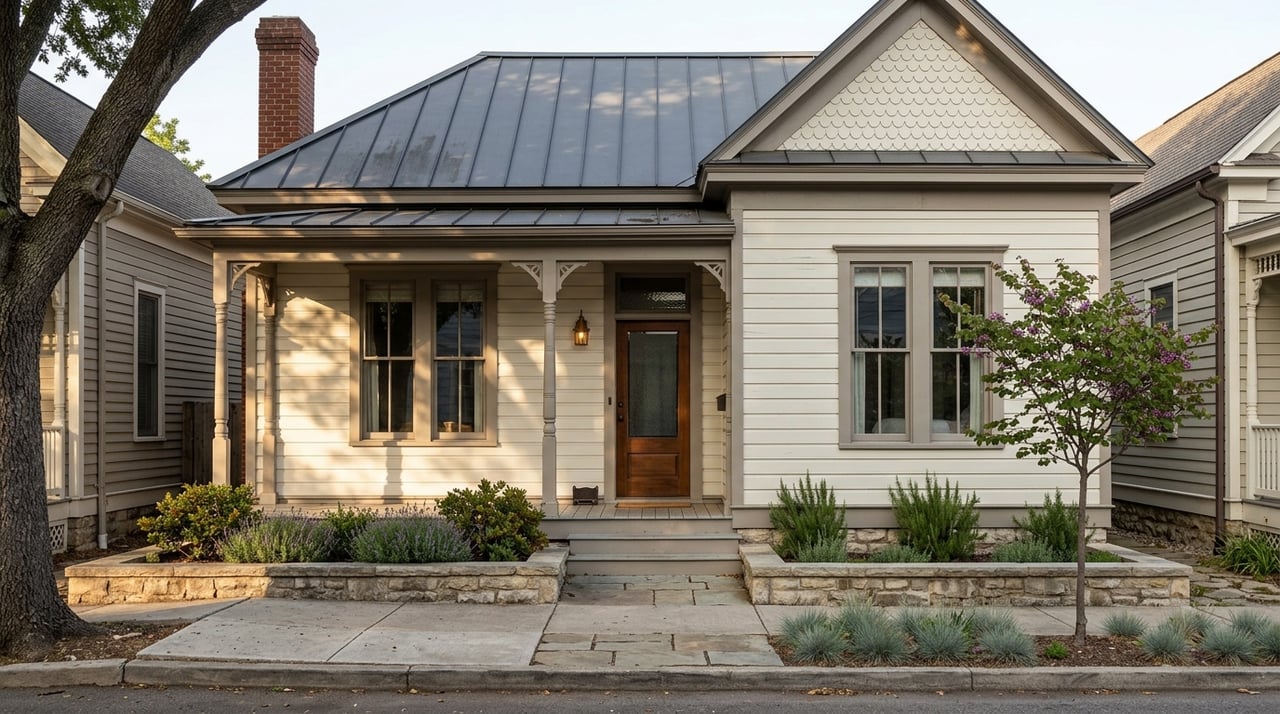
Beyond formal style names, older Sonora homes often have features that create a very different feel from newer subdivisions. The city’s historic-landmarks materials describe upstairs porches, front porches close to the sidewalk, and homes built over or behind business spaces on Washington Street.
Landmarks that shape the town’s identity
Part of Sonora’s appeal is that its historic character is visible in everyday places. You are not just buying near a few old homes. You are living in a setting shaped by landmark buildings, civic spaces, and long-standing local institutions.
The city’s historic-places summary highlights locations such as the Cady House, City Hotel, Sugg House, Tuolumne County Courthouse, Courthouse Square, and Tuolumne County Jail. St. James Anglican Church, often called the Red Church, is also recognized as California Historical Landmark No. 139.
These places help create a sense of continuity in the downtown core. For buyers who care about atmosphere as much as square footage, that can be a big part of Sonora’s appeal.
What downtown Sonora lifestyle feels like
Downtown Sonora offers a compact, active setting where shopping, dining, and local events are close together. The city describes downtown as home to unique boutiques and galleries, restaurants, drinking establishments, and community events and festivals.
Tuolumne County materials reinforce that picture by describing the downtown as walkable. They highlight local businesses and shopping stops that support the idea of a day-to-day lifestyle built around strolling rather than constant driving.
That walkable feel is also backed up by city planning language. Sonora’s existing-conditions summary says the downtown streets are pedestrian-scaled and that a majority of shops and services are within walking distance.
For many buyers, that is the real lifestyle draw. You may be able to enjoy errands, meals out, community events, and casual browsing without needing to plan every outing around a car.
Arts, museums, and community spaces
Downtown lifestyle is not just about restaurants and storefronts. Sonora also has civic and cultural spaces that give the area year-round activity.
The Sonora Opera Hall is one of the downtown anchors. The city highlights it as a venue for weddings, concerts, art shows, business expos, and other community events.
The city also lists the Veterans Memorial Military Museum, Sonora Fire Museum & Senior Lounge, and Tuolumne County Museum in or near the historic downtown. Together, these spaces add depth to the town center and give residents more reasons to spend time downtown.
Why location adds to the appeal
Part of Sonora’s draw is its setting in the broader Gold Country region. The city notes that Sonora is accessible year-round and near Yosemite National Park, Columbia State Historic Park, Railtown 1897 State Historic Park, and the city’s Dragoon Gulch Trail.
That mix can be especially appealing if you want a home base with both historic character and access to recreation. It can also attract buyers looking for a full-time residence, a second home, or a property that feels connected to the region’s heritage.
What buyers should know about older Sonora homes
If you are shopping for an older home in Sonora, you are not looking at a tiny niche of the market. The city’s 2024 to 2029 Housing Element says that about 51% of Sonora’s housing units were 50 years or older as of 2021.
That means older homes are a major part of the local housing stock. In many cases, character, age, and historic context are simply part of the Sonora buying experience.
The city’s land-use planning reflects that reality. Historic Mixed Use and Historic Mixed Density Residential designations are intended to preserve historic character in parts of the city with many older structures, especially in the historic core.
Remodeling rules can affect your plans
Historic charm often comes with added planning considerations. Sonora’s city FAQ says that exterior changes within the Commercial Zone or Historic Downtown District may require Design Review approval before a building permit is issued.
That is important if you are thinking about updating an older property. Projects such as new windows, siding changes, additions, or façade work may face more review than similar work on a newer home outside the historic area.
The city’s Design Review Guidelines make the goal clear. They are meant to preserve Sonora’s architectural heritage, retain the city’s charm, and keep alterations historically compatible.
The same guidelines also discourage some common modern replacements in visible historic work. Materials like vinyl, metal, and T-111 siding, along with aluminum-frame windows and doors, may not be the best fit for approval where historic compatibility is a concern.
Repair often matters more than replacement
For buyers, this is one of the biggest practical takeaways. A historic home may offer great curb appeal and a one-of-a-kind setting, but updates are not always as simple as choosing the cheapest modern option.
In Sonora’s historic context, repair and compatible materials are often favored over wholesale replacement. That can affect your budget, timeline, and contractor choices if you plan to modernize an older home.
This does not make historic homes a bad investment. It simply means you should go in with clear expectations and a good understanding of what responsible ownership may involve.
Local risks to factor into your decision
Two local issues deserve extra attention when you are evaluating older homes in Sonora. The city’s Housing Element says Sonora is within the Foothills Fault Zone and is subject to moderate to strong ground shaking from earthquakes.
The same document says most of the city is in a Very High Fire Hazard Severity Zone. For buyers, that makes it wise to look beyond cosmetic appeal and ask practical questions about condition and maintenance.
You may want to pay close attention to items such as roof materials, siding condition, defensible space, and overall fire-wise upkeep. On older homes, it is also smart to ask about structural condition and how the property has been maintained over time.
Lead paint is another key consideration
If a home was built before 1978, lead-based paint may be present. That matters both during the transaction and later if you plan renovations.
For many pre-1978 homes, sellers must give buyers a 10-day period to test for lead-based paint or lead hazards before closing. If you are planning repairs or remodeling after purchase, lead-safe renovation practices are also important because older paint can create hazardous dust when disturbed.
Is historic Sonora right for you?
Historic Sonora can be a great fit if you value character, a connected downtown, and a home that feels tied to the story of the region. It offers an experience that is very different from newer, more uniform neighborhoods.
At the same time, buying an older home here calls for a practical mindset. You will want to weigh charm, location, upkeep, design review rules, and property condition together.
If you like the idea of front porches, landmark streetscapes, local museums, and a pedestrian-friendly downtown, Sonora may offer exactly the mix you are looking for. And if you want clear, data-informed guidance while you compare options, working with a knowledgeable local-minded agent can make the process much easier.
If you are exploring homes in Sonora or comparing historic properties with other foothill and Central Valley options, Lisa Vandermeer can help you navigate the details with straightforward advice and concierge-level service.
FAQs
What makes historic Sonora different from other small towns?
- Sonora combines Gold Rush history, preserved landmark buildings, and an active downtown that still serves as a regional commercial, government, and cultural center.
What architectural styles can you find in Sonora homes?
- City planning documents identify Italianate, Eastlake, Queen Anne, Craftsman, and Mission Revival or Spanish Eclectic styles, along with false-front historic commercial buildings.
Is downtown Sonora really walkable for daily errands?
- Yes. City and county materials describe the downtown as pedestrian-scaled, with a majority of shops and services within walking distance.
Do historic homes in Sonora have remodeling restrictions?
- They can. Exterior changes in the Commercial Zone or Historic Downtown District may require Design Review approval before a building permit is issued.
Are older homes common in Sonora?
- Yes. The city’s Housing Element says about 51% of Sonora’s housing units were 50 years or older as of 2021.
What risks should buyers consider with older Sonora homes?
- Buyers should pay attention to earthquake exposure, fire hazard conditions, maintenance history, and possible lead-based paint in homes built before 1978.